
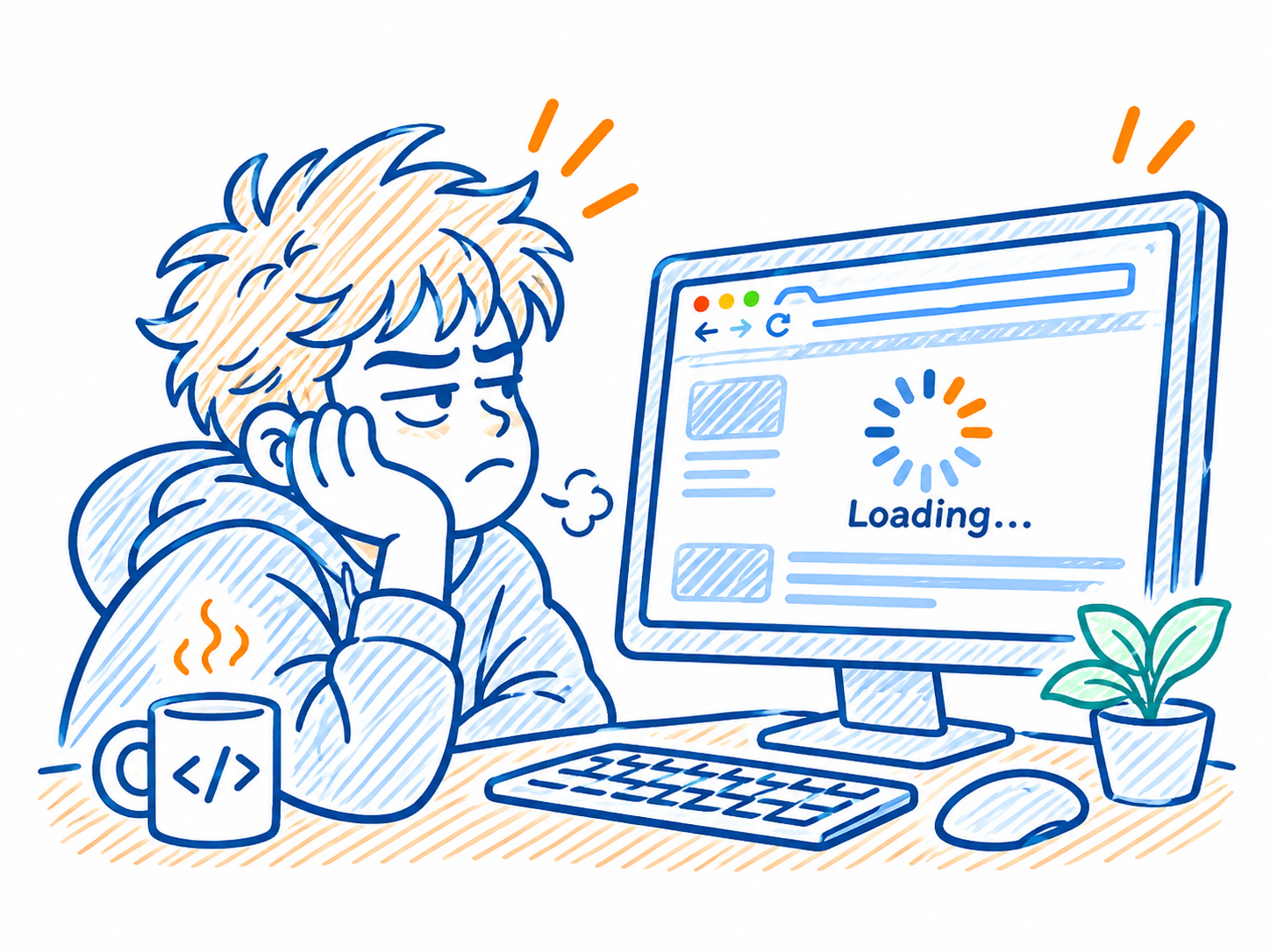
If you've written Django, you know the N+1 problem. Forget one select_related and your page goes from loading instantly to giving your client enough time to make a coffee before anything appears.
Surely AI gets this right?
Now that AI writes a big chunk of the code teams ship, you'd hope it could handle something this basic. In practice, it often can't. Add GraphQL to the stack and even an experienced full-stack developer or a strong AI model can let a vital select_related slip, because it isn't always obvious.
Won't you catch it before production?
Not always. N+1 queries often stay hidden until they reach production, and by then it's too late.
"But our seed script generates hundreds of realistic-looking records! We’d notice a slow query!"
Oh, my sweet summer child. If tech were that simple, everyone's lives would be far less stressful. Unexpected null fields, clients with much more data than anyone planned for, bloated production tables, deprecated records: the edge cases never end. Are you sure you've mocked them all?
A familiar story
Picture a stack that looks immaculate, with complex joins and beautiful results on the developer's machine and in the dev environment. Unfortunately, nobody hands their laptop to the client. Before long, people higher up are sending messages saying they waited two minutes for something to load while on a call with a client.
So how do you keep shipping AI-written code at pace and still sleep at night, knowing what went out at 5pm won't leave a client waiting for data by the time you wake up?
Test against real data with Baseshift
With one click or a simple CLI command, Baseshift gives you an instant, masked copy of your production database. That's prod-like data, so everything looks and behaves like the real thing, but sensitive information stays safe. You know exactly how the code you're about to ship will behave with your real clients' data volumes and edge cases.
The best part? You don't even need to look at the code. The workflow looks like this:
- Spin up a masked copy of production and test the new flow locally.
- If something stalls for too long, shut down the copy.
- Tell your AI agent to use the Baseshift CLI to pull the queries that actually ran on the database.
- Within seconds, the N+1 is obvious to the agent, and it adds the missing
select_related. - Click once more for a fresh copy and run through the flow again.
Find out before your client does
AI will keep writing more of your code, and it will keep missing things a senior developer would catch on a good day. That’s fine, as long as you find out on your own machine and not during a client call. Mock data shows you how your code handles the data you imagined. A masked copy of production shows you how it handles the data you actually have.
Ship at 5pm and sleep through the night. Your clients can still have the coffee. They just won’t need it to pass the time while a page loads.
Try Baseshift for free, no credit card required.